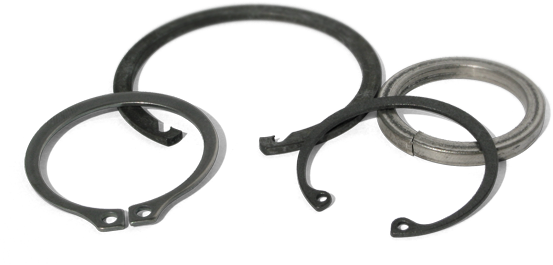
Even simple tasks like removing these retaining rings need thought and preparation
First, finish your outside work
and prepare your fields.
After that, you can build your house. – Proverbs 24:27
If you have ever tried to remove a retaining ring from some machine without an extractor, you already have the sense of what is being taught here.
Removing this looks easy.
A pair of pliers should work.
At some point, you might give up even though the correct tool costs $5 at Walmart. Having the correct tools and proper preparation makes the task at hand manageable.
In the same way, staying faithful to the Lord’s work requires daily preparation.
Study.
Prayer.
Worship.
Sacrifice.
These are the things that help us meet the challenges that we will face.
They prepare us for the work.
There are four things on earth that are small,
but they are very wise:
Ants are not very strong,
but they store up food in the summer.
Rock badgers are not very powerful,
but they can live among the rocks.
Locusts have no king,
but they all go forward in formation.
Lizards can be caught in the hand,
but they are found even in kings’ palaces. – Proverbs 30:24-28 NCV
You Have It – The Ability to do Great Things
The Proverb writer listed some very small creatures endowed by their creator with great strength and instinctive wisdom.
These creatures are not pretty. They are not specimens of strength, but look at what they do have:
Wisdom of planning and follow through
Proper conduct and discipline
Industry and stamina to get the work done
Application of their resources to survival.
If God gave all of these creatures the building blocks to do great things, why wouldn’t he have done it for us?
Further, he gave mankind something he did not give the creatures:
His Word!
Think about what mankind could accomplish by using what God reveals to us about life and success and survival.
Think about the power of hope he has given us.
We often trust too much in ourselves rather than investigate the plan and design that God has laid out. Many of us even choose not to act on God’s plan when we know about it! Sadly, many even choose to work against the plans God gave us.
Success can be defined in many ways, but in the end, it will not be defined without God’s involvement.
What are you doing to insure you’re in sync with God’s plan? ( 2 Timothy 2:15)
The person who tells one side of a story seems right, until someone else comes and asks questions. – Proverbs 18:17 NCV
How often have you heard “perception is truth” in the business place?
How many times a day are persuasive arguments used to back a false premise?
Do you ever make decisions based on what you’ve heard rather than your research?
It happens in business, sports – everywhere.
Worse, I know I don’t have to tell you that this get done with God’s word every day. Even when one reads the truth right out of the Bible, they are convinced it says something else by a skilled speaker.
The words of fools will ruin them;
their own words will trap them. – Proverbs 18:7 NCV
Words have a way of flowing out easily and whether we like it or not, describe exactly what is on the heart. (Matthew 15:18)
We can also use enough words to ease into sinful lifestyles:
We fool ourselves into justifying our actions
We fool ourselves into believing we are actually doing good
We fool ourselves into believing our own falsehoods
Upon closer examination, the justifications for error and sin do not hold up to the scrutiny of God’s word. In Proverbs 10:14 we see the need to gain knowledge through study so that we avoid this trap:
The wise lay up knowledge…
Good command of the Scriptures helps prevent us from being a victim of words of a fool. The tongue is described by James to be as powerful as a ship’s rudder or the bit in a horse’s mouth. (James 3) He also shows us that power works for both good and bad.
In the end, it is not possible to live in a way pleasing to God by trying to fool him with good intentions and flawed reasoning. That’s a trap that will only fool ourselves.
Ananias Restoring Paul’s Sight – 1631 – Pietro da Cortona
The events that led up to Paul’s baptism and conversion were pretty extreme. (Acts 9:1-18) In a matter of days he went from hunting those who believed Jesus was Christ to proving Jesus was Christ. (Acts 9:19-25)
Lucky for us, God doesn’t have to take that kind of action anymore.
Now, we have everything God wants us to know printed and bound and readily accessible. We can sit and read about the events that led up to Christ and the spread of the Gospel in the comfort of our home.
We can see the pain in the minds of the prophets.
We can see the doubt of the children of Israel.
We can see the excitement that Jesus brought to those that needed him.
We can see the urgency of Paul’s message.
Not only is the printed word readily available, we have digital alternatives that are often free. In devices that fit in our pocket, we can have any translation, word search for scriptures and attach personal notes to the text. It seems like having a Bible is no big deal anymore.
God put a lot of people through a lot of trouble to get the word out and confirm its truth.
And it worked!
In light of all that … Shouldn’t we make Bible study a higher priority?
The Baptism of the Eunuch – 1626 – Rembrandt (1606–1669)
The account of the Ethiopian Eunuch (Acts 8:26-39) is a reminder of how rich the Bible is in content. We could spend a lifetime in the book and not master the lessons it is able to teach us. Take a look at just some of the takeaways that this passage gives us about Christianity:
Christianity is learned
The Eunuch asked, “How can I unless someone guides me? (Acts 8:31)
It’s true. God meant for is word to be studied, but most importantly – taught. One of the key verses I pivot a lot of my posts on in this blog is 2 Timothy 2:2. In that one verse, four generations of teachers are described.
Let’s face it, while the basic gospel plan of salvation is simple to follow, the Bible has some difficult content that needs to be learned and then taught. The essence of the great commission (Matthew 28:19-20) is Teach – Baptize – Teach.
Christianity has been the plan from the beginning
Philip found the Eunuch reading from the book of Isaiah. (Acts 8:32-33 = Isaiah 53:7-8) A passage talking about the crucifixion! The Jews missed it then and today’s Jews still deny that passage is about Jesus.
We know from John 1 that God’s word was uttered in the beginning and Christ became that word.
We might not ever fully understand the full impact of that, but God’s plan is and always was in full effect.
Christianity cannot wait
Once the Eunuch understood what was required for his salvation, he asked to stop and fulfill it at the very next opportunity. (Acts 8:36-38)
We are not promised tomorrow…
Almost saved still equals lost …
Something to keep in mind whether we are currently the teacher or the student.
Christianity is a joy
After the Eunuch was baptized, he went on his was rejoicing. He understood in that moment that the blood of Christ had paid for his sins. What’s not to like about that?
Keep studying!
As we continue building a habit of reading and re-reading the Bible, remember to look deeper and deeper into the passages for more of what God was trying to tell us.



.jpg)
