Tag: Bible Study

  • What Did the Four Thousand See Out There?

    Jesus feeding a crowd with 5 loaves of bread and two fish - Early 1600's - Bernardo Strozzi
    Jesus feeding a crowd with 5 loaves of bread and two fish – Early 1600’s – Bernardo Strozzi

    Something awesome was happening!

    The people were even willing to starve to see it!

    The one thing that really helps me see the details and nuances in the Scriptures has to be the number of times I have read through it in recent years. I like how every time I pass through certain events, I see new details that I have never noticed.

    The feeding of the four thousand (Mark 8:1-10) makes me slow down and study it more every time I get to it. On one hand, it seems like a repeat of the earlier feeding of the five thousand, but upon closer inspection, a number of differences in the situation pop out:

    • The people had been following Jesus for three days
    • The disciples never offered to feed the crowd, Jesus had to initiate it
    • They started with more food, but had less left over

    Those three days must have been something special to keep the crowd together that long! What would it take for you to drop what you are doing and follow someone you had only heard rumors about?

    The word of God is like that. The more we are exposed to it, the more we can get from it. The more we get from it, the more we want. That’s pretty much what Paul meant in Romans 10:17

    I would love to have witnessed the feeding of the four thousand. I’m not a fan of camping, but I would sure have spent the three days out there with Jesus.

    But we are even more fortunate than they were…

    …we have the Bible.

    …we can set aside time for it in the comfort of our home

    … in time we can become mature Christians by studying it

    Find out what made those people want to stay out there with Jesus – Start a Bible reading plan today!

  • How I Get the Most Value From My Bible Study

    1. Read 2. Study 3. Repeat
    1. Read 2. Study 3. Repeat

    A quick attempt to find it through a search on Google has come up empty, so maybe I am the first to notice the irony of Matthew 24:4. Matthew 24 is quite a difficult passage describing the destruction of Jerusalem and Christ’s return. As I do my study on it and consult the commentaries I have at my disposal, Matthew 24:4 keeps jumping out at me:

    (Take heed) See that no one (no man) leads you astray. – ESV (ASV)

    Take heed that no man (no one) deceive you. – KJV (NKJV)

    There are as many varied explanations of Matthew 24 as there are commentaries apparently. Which the one is the one that will not lead me astray?

    Put the commentaries down because the key to understanding a passage like Matthew 24 is lots of Bible study. There is no way to properly understand a difficult passage without solid grounding in the easier to understand portions of the Bible. People get away with diverse teaching of the Scriptures because in general, we are not reading and studying our Bibles like we should. We are not catching them in the act!

    Reading and studying.

    Did you see the emphasis? The word “and” is in bold, italics and underline.

    Daily devotional reading is an excellent habit and a required part of developing our Bible knowledge. The “study” part is even more important to the development of a full understanding. When we take the time to answer the who, what, when, where, and why of a passage, we begin the process of building a well-grounded foundation for understanding the Bible.

    What works as a complete Bible program for me looks something like this:

    • Daily reading schedule – Dedicate a certain amount of time for a straight reading of the text
    • Reflection on what was read – I choose to write about what I have read each day in this blog, you might choose to do a word study, or write a journal entry, or discuss with a family member.
    • Formal Bible study attendance – as in … go to your congregation’s offerings at every opportunity
    • Analyze what was taught in sermons and Bible classes – Don’t take another solely at his word.

    It is definitely a challenge to work out the routine and the details. The main thing I tell others to do is to just get started.

    What is one thing you can add to your Bible study habits to take yourself to the next level?


  • How the World Attacks God’s Word

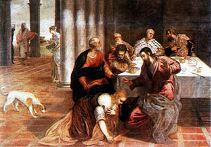
    Jesus at the House of the Pharisees - Tintoretto (1518–1594)
    Jesus at the House of the Pharisees – Tintoretto (1518–1594)

    As I make notes about the opening verses of Matthew 12, I see an amazing picture being drawn. With a quick reading of Matthew 12:1-8 this is what jumps out at me:

    • The Pharisees nitpicking Jesus actions
    • The Pharisees holding their interpretations of the law more sacred than the law itself
    • The Pharisees excusing David’s sinful actions but condemning Jesus’ perfectly legal actions
    • Jesus demonstrating his superior knowledge of the law
    • Jesus using logic to silence the Pharisees

    The leadership of the Jews thought they had a pretty good excuse for resisting Jesus. I say they were in fear for their way of life. They had an opulent setup that had no future if Jesus really was the Messiah. It must be the nature of people to not want to change, because they sure haven’t changed yet.

    The enemies of Christ are still around and they still fear for their way of life. They’re even using the same old tactics against him:

    • People nitpick Christians’ beliefs at every turn
    • People want to hold what they “feel” is right more sacred than God’s word
    • People are tolerant of sin but intolerant of obedience to God’s word

    It is up to us to stand firm against those that are trying to bring down Christ. We are in charge of using our superior knowledge and logic to counter those who want to silence God.

    Would you have known how to argue against the Pharisees in the Matthew 12:1-8 event? What can you change today to get better at defending God’s word?

  • How to Build a Rock Solid Foundation

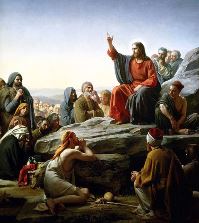
    Carl Heinrich Bloch (1834–1890) - The Sermon On the Mount
    Carl Heinrich Bloch (1834–1890) – The Sermon On the Mount

    Christ tells us in Matthew 7:21-23 that not everyone that says they are living as a follower of Jesus will make it into heaven.

    We have to be doing his will.

    The thought of that should scare more people. Really, the thought of that should concern everyone that believes God is righteous and just. Both the saved and the lost will have been held up to God’s standards, so it is important to make sure we know exactly what those standards are. To some of us he will have no choice but to say “…depart from me, I never knew you …” (Matthew 7:23)

    Thankfully, Jesus goes on to tell us how to avoid that – he says to “hear these words of mine and do them!” He likens that act to building a rock solid foundation that will support us throughout this earthly lifetime. (Matthew 7:24-27)

    Here are a few random ideas for building a rock solid godly lifestyle:

    • Avoid screen time (T.V./Computer/Smartphone) that feeds you with “off-color” suggestive programming – they dull your senses to offensive material
    • Spend more time with people also trying to get to heaven – It helps control temptation
    • Challenge or research teachings that are different from what you are used to hearing – You will either learn from or correct someone what the Bible says

    Obviously, I can’t leave off more Bible study. That alone should be the greatest portion of your foundation building activities. Knowing what the Bible actually says and not taking another’s word for it is critical to your salvation!

    What are some things you can change to build a better foundation for you and your family?


  • How to Beat Satan

    “Again it is written …”

    When Jesus was being tempted in the wilderness he gave us this phrase, which might be the most important phrase in the Bible. (Matthew 4:7) When responding to a question about the Scriptures, we should be using the Scriptures!

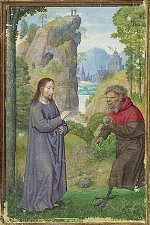
    Temptation of Christ - 16th Century - Simon Bening (circa 1483/1484–1561)
    Temptation of Christ – 16th Century – Simon Bening (circa 1483/1484–1561)

    The account of the temptation of Jesus (Matthew 4:1-11) is a short one, but it holds some very heavy lessons. What jumps out at me is how powerful Satan really is. When Satan was tempting Jesus, he gave us an example of how well he can misuse the Scriptures.

    It still happens all the time – Satan helps God’s enemies misuse the Scriptures. Those who wish to defend God often cannot, because their knowledge is not strong enough to stand against the attack on their beliefs. We’ve all heard the common ones:

    • Judge not lest ye be judged
    • Take a little wine for your stomach’s sake
    • Eat, drink, and be merry!
    • Be not overly righteous

    The pro-gay community is getting really good at deflecting the Bible’s prohibition against homosexuality.

    It is important that a Christian is able to respond to such temptations (or tests of our knowledge) with “It is written … ”

    He must also be able to do so in context, and in the spirit the text was written.

    If you are a Christian and desire to respond the same way Jesus showed us when he was tempted, there are some easy steps you can take:

    • Begin a daily devotional reading program.
    • Take extra time to study on a regular basis
    • Attend Bible classes at every opportunity
    • Set a goal to become a Bible teacher

    Doing these things over the years will make you good at using the Bible the way God intended for it to be used.


  • No More Spoon

    Three day old parrot being fed at the Prague zoo.
    Three day old parrot being fed at the Prague zoo.

    I read a blog post this morning about the content we choose to read. The masses tend to consume the easy to understand, non-threatening material while skipping the stuff that makes them think. They do not want a conflict in what they have already been taught. They want their beliefs affirmed.

    Even worse, most people will quit reading when a post uses unfamiliar words or concepts. I’m not sure how we (the masses) expect to learn anything new when we are unwilling to learn new words or risk disturbing some deeply held belief.

    An awful lot of people do that with their Bible study. Take the book of Romans – read all the way through, we see the full plan of Salvation laid out for us.

    • We sin
    • We need salvation
    • Christ made it possible
    • Through obedient faith we join his body
    • Through our gratitude we serve him

    The details of Romans are challenging and require lots of study and thought. All too often, Romans is cherry picked for specific words and sentences, leaving the context behind.

    We should all be more like the noble Bereans. (Acts 17:11) Everything we read and hear about the Bible should be challenged, especially when it is a “new” idea to us. Without that we collectively become less knowledgeable about what God wanted for us. We risk only knowing what someone else wants us to think God wanted for us!

    So to restate what got me thinking about this from a Bible perspective:

    If we avoid Bible study that isn’t spoon fed to us, all we’ll end up doing is eating from a spoon.