Christ in the Garden – ~1600 – Caravaggio (1571-1619)
The first thing he thought to do was pray.
Really hard.
As the time approached for Jesus to be captured, he took time out to be with God. (Luke 22:39-46)
And why would the Son of God need to pray?
It was comforting.
It let God know he comes first.
It let God know what Jesus thought he needed.
Jesus knew he had to go through the crucifixion, but he asked God to reconsider anyway. He left us this excellent example to show us that even when God isn’t going to change the course of events, he still has much to offer.
He can offer us the strength to face challenges
He can offer us the wisdom to complete the task
He can offer us a peace only he can offer
Make it a habit to talk to God often through reverent prayer. It might be beneficial to have been a regular customer on the judgment day!
Christ Taking Leave of the Apostles – ~1310 – Duccio (1260–1318)
Power and position.
People have a natural disposition toward being the one in charge.
The apostles were no different. While they still had a misunderstanding of what Christ’s kingdom was going to look like, they were jockeying for high office within it. (Luke 22:24-30)
Christ doesn’t want leaders like that.
Leaders serve.
Leaders put themselves last.
Leaders suffer difficulty.
Leaders in the church have plenty of opportunity to fail. They are usually challenged every time they make a decision. Every decision makes someone angry.
It is no wonder that Paul said they deserve a double portion of honor! (1 Timothy 5:17)
Leadership done right in the Lord’s church is not about the position. It is about the souls they preside over. The Bible compares them to the shepherd protecting his flock.
When we seek to be Christian leaders, let’s be those that seek to wield the power as servants. Leaders that influence others toward salvation…
In Luke 21, as Jesus is foretelling Jerusalem’s destruction and his return, he suddenly warns against these symptoms of lifestyle and what to do about them – Be careful of what weighs down your heart. (Luke 21:34)
At some point, our time will run out and all we will have is the stuff we are made of to offer up in the judgment. That offering will be the direct result of what we put in our heart.
God made our heart (or mind, or soul) in such a way that it returns exactly what we put in it. Fed one way, it returns the things Jesus warns about in Luke 21:34. Fed another way, we would be godly people able to avoid the “trap” of death.
In summary, we actually become what we think about.
Look at what the Proverb writer says:
Be careful what you think,
because your thoughts run your life.
Don’t use your mouth to tell lies;
don’t ever say things that are not true.
Keep your eyes focused on what is right,
and look straight ahead to what is good.
Be careful what you do,
and always do what is right.
Don’t turn off the road of goodness;
keep away from evil paths. – Proverbs 4:23-27 NCV
He is showing us that we have control over what we think about. Some may be out of practice, but we have the ability to feed our minds with good. When we do that, our decisions and conversations and attitude will begin to reflect godly things. The kind of things we want to present to Christ when he returns. (Luke 21:36)
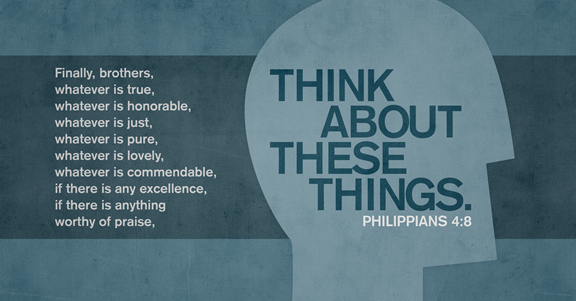
Paul gave us a number of lifestyle directions in just about every letter he wrote. One of my favorite being Philippians 4:8:
Finally, brethren, whatsoever things are true, whatsoever things are honest, whatsoever things are just, whatsoever things are pure, whatsoever things are lovely, whatsoever things are of good report; if there be any virtue, and if there be any praise, think on these things. – Philippians 4:8 KJV
If Jesus comes right now, will your heart be full of what is in the Luke 21:34 warning or the Philippians 4:8 exhortation?
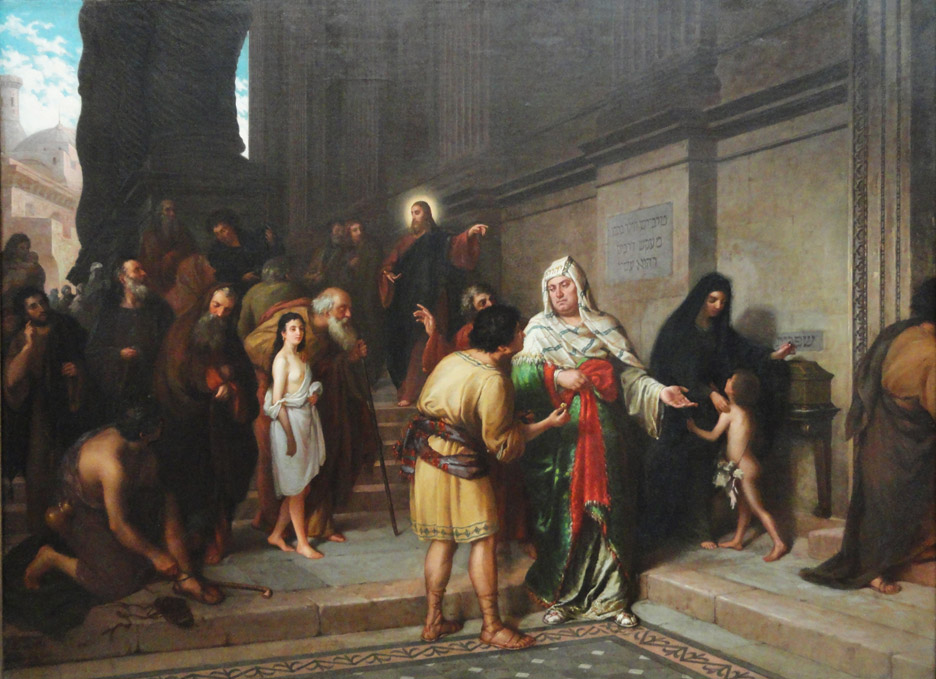
The Widow’s Mite – João Zeferino da Costa 1840-1916
Jesus talked a lot about money. (In fact the whole Bible does throughout the Old and New Testaments)
I think it is interesting that the account of the widow’s mite is the last recorded teaching Jesus made in public. (Luke 21:1-4) The timeline from this point leads quickly to his crucifixion.
Why would the widow’s giving be Jesus’ last words on how to please God?
Because her gift told us much about the proper attitude of a Christian. I can think of at least three reasons for us to give like her:
It demonstrated trust in God – When we budget our giving, it needs to be at the top of the list. How can we say we trust God to provide when we pay our cable bill first and give him what is left over?
It was sacrificial – The kind of heart God wants us to have is one willing to sacrifice for him. Our giving is not a sacrifice unless we actually sacrifice something.
Presumably, it was cheerful – Since Jesus new her heart and still praised her gift, we can assume she gave in a cheerful manner. Who wants a gift that was only presented out of duty?
The kind of giving we see these days is nothing like the widow’s giving. The giving we see by philanthropists is often a spectacle. It certainly doesn’t cause any harm to the finances of the giver.
They should enjoy the praise of men while they can, because God will not give them any credit for it! (Matthew 6:2)
Those of us with more modest means have the ability to give so much more than they. It all starts with showing God a little trust.
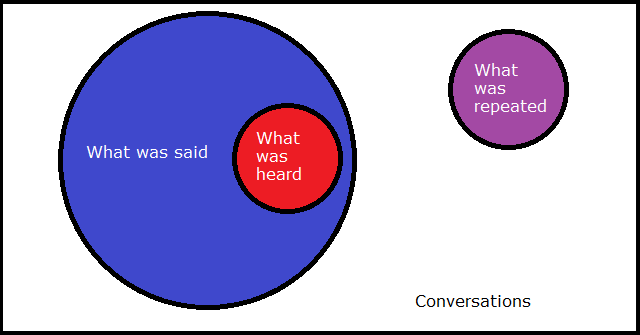
Without thinking about it, we have gotten good at hearing only what we want to hear.
Here’s a picture I drew as a joke:
Our habit of listening and repeating looks something like this
Jesus once quoted Psalm 110:1 to the Sadducees to make the same point. (Luke 20:41-44, Matthew 22:41-46, Mark 12:35-37) How can the Christ be both David’s son and his Lord? Christ was calling them out because they were choosing ignorance of the scriptures for their own convenience.
In all three accounts, Jesus follows up the discussion with a warning about the Scribes. They had gotten a little too used to their lifestyle so they were ignoring God’s word and hoping it would go away.
Christians and non-Christians alike have carried that tradition all the way until now. If we spent more time with the Bible, we would not have so many various “truths.” By doing a better job of reasoning what the Scriptures say, we could all eventually come to the same conclusions.
Jesus never made any bones about it: we are responsible for all of God’s word. Sometimes we have to make hard decisions. Sometimes we have to relearn what we were once taught.
But … so many debates could be eliminated with everyone taking an honest approach to the Bible!
Challenge: Pick one typical day in your life and consider whether each action you take would harmonize with God’s word. If you don’t know, make a Bible study out of it.
Just when you think he isn’t paying attention…
…that he will never have time for you…
…that you have gone too far…
…he will be there for you.
Unexpected Pleasure
Zacchaeus was a tax collector. He was very rich. He was likely very dignified. He was certainly very hated. (Luke 19:1-10)
He probably went his whole career believing that he would not benefit from the Messiah’s coming. The Pharisees had specifically excluded the publicans from association with them – so that was that.
Then, why would Zacchaeus go out of his way to see Jesus?
Maybe he heard about the publican named Matthew that was traveling with Jesus. Maybe the Parable of the Pharisee and the Tax Collector had made its way to him. (Luke 18:9-14)
Whatever it was, it caused him to seek Jesus.
Zacchaeus did exactly what Jesus taught us to do: Ask. Seek. Knock. (Matthew 7:7-12) Not only does he teach us to do that, but he means for us to keep doing it. The language in those verses is more like “keep on asking, seeking, and knocking” – Even when the outcomes doesn’t look promising.
Climbing into that sycamore tree wasn’t very dignified. It might have been rather comical seeing that short man in business clothes scramble up a tree.
But it was the right attitude.
And Jesus saw him.
Expected Pleasure
Luke ends the account with Jesus saying, “For the Son of Man came to seek and to save the lost.” (Luke 19:10)
Just like Zacchaeus, we are not doomed unless we doom ourselves. Like Zacchaeus, we are only lost until we can be united with Christ.
And like Zacchaeus, that will happen when we take action to seek him and follow him and obey him.
If you feel like a Zacchaeus, go out of your way to find him today!