Blog

  • This is How the Gospel is Taught

    At first glance, it was not clear to me why the episode of Jesus and the Samaritan woman is included in the gospel. (John 4:1-42) Jesus was tired, hungry and thirsty from traveling. There are no miracles here. People gathered around him wherever he went. Nothing out of the ordinary, if you’re Jesus.

    Then I looked at it from the standpoint of the gospel being for all people, in this case, Jew and Gentile. There is still more here than that, though. Looking still deeper, I see standalone instruction on how to bring someone to Christ. It is the ultimate demonstration that God is no respecter of persons.
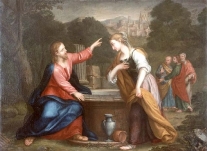
    Giacomo Franceschini - Gesù e la Samaritana al pozzo - 17th or 18th century
    Giacomo Franceschini – Gesù e la Samaritana al pozzo – 17th or 18th century

    The Samaritan woman embodies everything that Christ is not:

    • male vs. female
    • God vs. man
    • wisdom vs. ignorance
    • pure vs. immoral
    • Jew vs. Gentile

    And yet … Jesus reveals to her who he is. Through his love and kindness he convinces her and those in her village that he is Christ. He didn’t even wait until an opportunity came to work it into the conversation. He just started teaching. We see her belief grow from his being a Jew that she is wary of, (John 4:9) to Sir, (John 4:11) to profit, (John 4:19) and finally the Christ. (John 4:29) This realization spread to the others and they desired him to stay with them. Jesus shows us how simple the gospel is. He shows us how so many already have a basic idea of who he is. We only need to lead them the rest of the way. When was the last time you mentioned Jesus in a conversation?

    Daily Bible reading for November 8

    Psalm 99 2 Kings 8 Zechariah 12-13 John 4:1-42

  • Love The Light

    In Jesus’ conversation with Nicodemus, he pronounce a judgment on those who choose not to believe and obey. Jesus brought the light into the world,

    …and people loved the darkness rather than the light because their works were evil. – John 3:19

    Those who work hard to do what is right are often scoffed at or teased or otherwise discouraged from trying to improve. This isn’t just Bible things we are talking about – we also see it with those trying to be financially responsible and even those that want to build their own business rather than work for a company.

    The light is where safety and goodness live
    The light is where safety and goodness live

    It is human nature to not want someone else to expose our shortcomings, but what Jesus describes in John 3:19-21 is a warning of the ultimate shortcoming. As we continue to grow and mature in Christ we need to be strong enough to bring others with us and not let ourselves be influenced by them.

    From personal observation, the places we have to be careful when we expose ourselves in the light are things like:

    • Someone calling us a “legalist” when we are simply trying to obey God’s word
    • Someone trying to cast doubt on the Bible because it is “written” by men
    • Someone trying to change our views because it doesn’t agree with the popular opinion

    These are very persuasive arguments that cause many to change their opinion without consulting their Bible. The metaphor of the light is spot on in how the world reacts to exposure to God’s word. They refuse to examine themselves and refuse to grow.

    God loved us enough to send his son, (John 3:16) let’s return the favor by doing what is true (John 3:21)

    Daily Bible reading for November 7

    Psalm 98
    2 Kings 6:24-7:20
    Zechariah 11
    John 3:22-36

  • How Can These Things Be?

    What if a farmer planted his fields, watched it grow and mature into produce but never harvested it? What if he only contemplated how the seeds sprout and refused to enjoy the fruit until he understood?

    A farmer doesn't try to understand how his crop grows before he goes to harvest.
    A farmer doesn’t try to understand how his crop grows before he goes to harvest.

    This would be one hungry farmer!

    Jesus compared that situation to people trying to understand the kingdom of heaven. In Mark 4:26-29, Jesus points out that our farmer never has to understand completely how a seed sprouts. He needs only to complete the steps required by nature to make a crop.

    When Nicodemus asked “How can these things be?” he became the hungry farmer. (John 3:9) Jesus’ rebuke shines light on those who hear the gospel but fail to respond. (John 3:10-15) Nicodemus, of all people at the time, should have understood what Jesus was teaching since he was a well-educated “ruler of the Jews.”

    There are many that will fail to respond to the gospel because they do not understand everything the Bible teaches. Like Nicodemus, they will fail to respond to that first step of faith. Like the farmer that fails to harvest, their soul will starve.

    Daily Bible reading for November 6

    Psalm 97
    2 Kings 6:1-23
    Zechariah 10
    John 3:1-21

  • 7 Signs that Jesus Cares For Us

    The Gospel of John is proof of Christ’s deity. It is proof of his love for us. John’s main appeal is for us to believe that. He selected seven of Jesus’ miracles that demonstrated his authority over the elements and even death. Through his works, he proved he was the son of God and how much he cares for us by:

    Marriage at Cana - 1596 - Marten de Vos (1532–1603)
    Marriage at Cana – 1596 – Marten de Vos (1532–1603)

    Sometimes when one is down, when faith is slipping, or burdens seem heavy, a little refreshment is needed. The Gospel of John is the place where we can find Jesus love and concern for us. Whether though providing for our well-being or weeping for a dead friend, Jesus’ compassion for each one of us should lift us out of the darkest of times.

    Daily Bible reading for November 5

    Psalm 96
    2 Kings 5
    Zechariah 9
    John 2

  • Set Some Giving Goals for the New Year

    A combination of some things have me thinking about my giving:

    • I am planning my goals for the new year, which begins in less than 60 days!
    • I am working on the church budget over my areas of responsibility
    • I have been assigned to pray over the offering during services this month.

    When we look at God’s instructions to the Israelites concerning their giving and charity, He expected a lot out them! Most people would answer the question “How much?” with 10%, but when we read deeper, the net amount was much more. Farmers couldn’t cut the corners of the field, glean the crops or even pick up what they had dropped. If it weren’t for that, Ruth would have never met Boaz. In fact if the Jews had totally followed the spirit of the law, their nation would never have wanted for anything.file0001163694074

    In New Testament times, we don’t have exact amounts assigned to give, but we can see from the Jews example what God considers reasonable. There are also a number of adverbs used to describe what our giving is supposed to look like. I challenge us all to compare our giving to each of these passages:

    • Liberally – Luke 6:38
    • Sacrificially – Hebrews 13:16
    • Cheerfully – 2 Corinthians 9:7
    • Purposefully – 2 Corinthians 9:7
    • Secretly – Matthew 6:3-4

    There are always plenty of needs and more we can do. What can we do to stop money from being the reason we fall short?

    Daily Bible reading for November 4

    Psalm 95
    2 Kings 4
    Zechariah 8
    John 1:19-51

  • My Word is a Contract

    In an effort to improve their search engine results, Google has been increasing emphasis on the authorship of blog posts and deemphasizing methods that have allowed people to trick their way to the top of the results. This is good because we can have more confidence that the content is from honest effort and not rigged to sell advertising.

    God is looking for his followers to build that same kind of recognition. When James said to “let your yes be yes and your no be no” (James 5:12) he wasn’t just worried about correcting a habit of making idle oaths. It is possible to build a reputation among our peers so that we will be taken at our word.

    When Jesus gave the same instruction, (Matthew 5:33-37) he was talking to folks who had circumvented the 9th commandment to the point they could tell lies without remorse. Can you imagine trying to function day-to-day where people would require you to swear an oath before believing anything you say?

    Solomon said that a fly spoils the ointment (Ecclesiastes 10:1) as does each impure action to our reputations. Those who live in a way that builds a great reputation do not have to worry about any prohibition against taking an idle oath. They have the freedom to speak using the faith and credit of their word.

    Daily Bible reading for November 1

    Psalm 92
    2 Kings 1
    Zechariah 5
    James 4:11-5:12