Previously, I made a big deal over Matthew 24:4 and Jesus’ warning not us to be led astray.
Matthew 24:36-44 is a great passage to completely make my point. Many are teaching that we will know through some apocalyptic signs that Christ is on his way back. In this passage, Jesus sets a few things straight about the judgment:
Only God himself knows the day it will happen (Matthew 24:36)
We will carry on in our lives until the instant it happens (Matthew 24:39)
We are warned to be ever watchful (or awake) (Matthew 24:42)
It’s as unreasonable to think we can guess the day as it is to expect a thief in our house tonight (Matthew 24:43)
One of Satan’s best tools to trick Christians out of their salvation is to allow them to think they have plenty of time. People have a tendency to believe this lie of having all the time we need, until suddenly, they don’t.
Each additional day we have is a gift. What is one way you can use today a little better?
A quick attempt to find it through a search on Google has come up empty, so maybe I am the first to notice the irony of Matthew 24:4. Matthew 24 is quite a difficult passage describing the destruction of Jerusalem and Christ’s return. As I do my study on it and consult the commentaries I have at my disposal, Matthew 24:4 keeps jumping out at me:
(Take heed) See that no one (no man) leads you astray. – ESV (ASV)
Take heed that no man (no one) deceive you. – KJV (NKJV)
There are as many varied explanations of Matthew 24 as there are commentaries apparently. Which the one is the one that will not lead me astray?
Put the commentaries down because the key to understanding a passage like Matthew 24 is lots of Bible study. There is no way to properly understand a difficult passage without solid grounding in the easier to understand portions of the Bible. People get away with diverse teaching of the Scriptures because in general, we are not reading and studying our Bibles like we should. We are not catching them in the act!
Reading and studying.
Did you see the emphasis? The word “and” is in bold, italics and underline.
Daily devotional reading is an excellent habit and a required part of developing our Bible knowledge. The “study” part is even more important to the development of a full understanding. When we take the time to answer the who, what, when, where, and why of a passage, we begin the process of building a well-grounded foundation for understanding the Bible.
What works as a complete Bible program for me looks something like this:
Daily reading schedule – Dedicate a certain amount of time for a straight reading of the text
Reflection on what was read – I choose to write about what I have read each day in this blog, you might choose to do a word study, or write a journal entry, or discuss with a family member.
Formal Bible study attendance – as in … go to your congregation’s offerings at every opportunity
Analyze what was taught in sermons and Bible classes – Don’t take another solely at his word.
It is definitely a challenge to work out the routine and the details. The main thing I tell others to do is to just get started.
What is one thing you can add to your Bible study habits to take yourself to the next level?
Woe unto You, Scribes and Pharisees – between 1886 and 1894 – James Tissot (1836–1902)
The Jews missed a great opportunity. They overlooked the signs (or just ignored them) that the Messiah was present among them. How did that happen?
I’m not sure what the crowd’s reaction was at the time, but I have always gotten a good chuckle when Jesus summed it up for them:
You blind guides, straining out a gnat and swallowing a camel! – Matthew 23:24
All things considered, we live in a great spot on God’s timeline. We have more resources to read, study, and analyze God’s word than ever before. We should realize though, we are not insulated from making the same mistakes the Jews made. Jesus gave us a great outline of what they did wrong in Matthew 23, where he continues his harshest language directed at the Jews. If we are to avoid being in the same situation, we should consider the things he told them:
Your example can both save or hinder others (Matthew 23:13)
Convert others to God’s word, not a man’s opinion (Matthew 23:15)
Become known as one whose promise is always binding (Matthew 23:16-22)
Concern yourself with important matters, not trifles (Matthew 23:23-24)
Outward appearances are less important than what we do and what we think (Matthew 23:25-26 and Matthew 23:27-28)
Honor the truth over tradition (Matthew 23:30-31)
What are some ways we can use these things to improve personally, in our families and in our churches?
An etching by Jan Luyken illustrating Matthew 22:11-14 in the Bowyer Bible, Bolton, England.
It has become fashionable across Christianity to deemphasize strict obedience to the God’s word. Many emphasize just the aspects that they like and skip over the rest. Those who try to follow and teach what the Bible teaches are often called “legalists.” Ironically, the “gospel of love” they teach omits that part where Jesus said to keep his commandments if you really love him. (John 14:15) Admittedly, it is not hard to understand why this position sells so easily.
First, I respond to that position by saying that being obedient is not the same as being a legalist.
Second, I respond to the position by saying we should look at what Jesus taught. The Parable of the Wedding Feast is a great place to study this. (Matthew 22:1-14)
We’ll pick up the illustration where the invitation has been opened to all who would come and the king arrives. (Matthew 22:11) He takes a look at everyone who has “accepted” the invitation, but finds one who is unprepared to be there. The guest is asked to account for this infraction and he is stunned to silence. (Matthew 22:12)
Why was he silent?
He knew he had insulted the occasion
He knew he had no excuse
He couldn’t say he never had a chance
Sadly, many that have convinced themselves that it is ok to “come as they are” will find themselves in the same situation as this guest. In the same way that the expectation is for the guest to have known better, so it is for us at the judgment. Those not properly attired in obedience will be cast out.
What are some ways we can be better prepared for when the King returns?
Jesus heals two blind men – 19th century – Julius Schnorr
I have read about an experiment where a bunch of bananas are hung at the top of a pole in a monkey cage. When the monkeys tried to climb up to get the bananas, they would get squirted with a fire hose until they were knocked off the pole. Eventually, the monkeys would quit trying to get the bananas.
The interesting thing happened when a new monkey was put in the cage and knew nothing about the water. The original monkeys would tackle him to keep him from climbing up the pole. Eventually, they trained that monkey to attack other new monkeys – and so on.
The occasion of Jesus healing the two blind men in Matthew 20:29-34 makes me think of that experiment. The experiment was used to illustrate the power of the crowd. If we let the crowd tell us what is possible, rather than go with what we know about ourselves, we will never be anything but what the crowd wants us to be.
I don’t know why the crowd was telling the blind men to be quiet. Maybe they were a crowd of Pharisees that were jealous. Maybe they were just the kind of people that want the unfortunate and homeless to stay out of sight. Either way, those blind men did not allow the crowd to tell them how to act.
How is it that a couple of blind men knew that Jesus was the Son of David? They were so sure about who he was and what he had done that …
they didn’t let a crowd of people with some other agenda get in their way
they didn’t make excuses about their disability
they were very specific in their request from Jesus
The blind men saw more that day than all the Pharisees put together – whose spiritual blindness kept them from the rewards that God promised.
The crowd wants us to remain like them. Stay in the dark. Stay ordinary. Depend on them.
Jesus wants us to be like him. Shine your light. Rise above. Depend on God.
What do you usually choose when faced with the choice of turning to God or going with the crowd?
The Parable of the Laborers in the Vineyard – 1637 – Rembrandt (1606–1669)
Did you ever notice the order the vineyard master paid his laborers? I know you have read it, but did you really notice how he did it? (Matthew 20:8) When we read about the laborers in the vineyard, (Matthew 20:1-16) we see the early arrivers make a firm deal with the master. The people that came later leave it up to the master to pay them what he would.
What did the master have in mind when he paid the latecomers first – right in plain sight of the early arrivers?
The chapter 20 break gets in the way of the flow of the conversation here, but the group is still in a discussion about rewards from chapter 19. The disciples still had a lot to learn about the grace of God and just what it was they were laboring for.
If you felt a little pang of unfairness when you read the text, you are probably not alone. Our earthly lives teach us that we are supposed to get a day’s pay for a day’s work, but Jesus is warning us here that following him requires a new way of thinking. The old way of thinking creates the kind of Christian that…
Has been going to church all their life and is somehow more spiritual
Has been a member of a congregation since its beginning and has more authority than the new members
Gets angry when one clearly qualified becomes an elder or deacon when they haven’t “been around as long”
Jesus shed light on the contrasts of a bitter and petty laborer and one that put his trust in the master. We should use that same light to examine ourselves. Jesus’ goal for his church is that it operate as a smooth unit, one member just as important as the next. We are all trying to get to heaven, and we all need to be available to help others get there too.
What will you do this year to help a newcomer fit in?
 Previously, I made a big deal over Matthew 24:4 and Jesus’ warning not us to be led astray.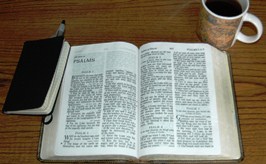
_-_James_Tissot.jpg)


