Blog

  • What if Jesus Turned the Stone Into Bread?

    Jesus Tempted in the Wilderness - between 1886 and 1894 - James Tissot (1836–1902)
    Jesus Tempted in the Wilderness – ca. 1890 – James Tissot (1836–1902)

    I’m glad he didn’t –

    He would be a completely different kind of savior if he had.

    Every time I read through the account of Jesus’ temptations, (Luke 4:1-12) I have to think back through the reasons Jesus did not turn the stones into bread. It seems like such a simple and harmless act – plus his fasting period was coming to an end.

    Speaking of fasting …

    Fasting is one of those biblical ideas taken to its extremes by the various denominations. It is a rather simple exercise intended to bring the person closer to God, but it has been exploited to the point of being meaningless to most people. That, and the lack of a New Testament requirement for it, has caused the original intent of fasting to become obscure.

    Fasting is a period of sacrifice to the point of discomfort to remind us of our humanity and our need for God.

    So what would be different if Jesus had turned the stone into bread?

    He would have been turning away from God

    If fasting is intended to be a time of drawing nearer to God, then Jesus was doing everything he could to show God he needed him. Using his ability to perform miracles for a selfish purpose voids that dependence.

    We often do that when we allow worry and fear to drive our response to challenges.

    He would have understood us less

    Jesus came to the earth in the flesh so God would know exactly what our lives are like. He suffered physical discomforts. He was tempted to sin. He had to learn how to survive.

    Turning that stone into bread is something a person could never do. Jesus would never know what human suffering is by taking advantage of such an easy solution.

    When we are trying to be helpful, we often risk diminishing others’ suffering by saying we understand what they are feeling. We should be careful when we do not share a similar experience.

    His humanity would have suffered from doubt

    The devil tempted Jesus by saying, “If you are the Son of God…” (Luke 4:3 my emphasis.) In other words, “prove to us both that you can really do it!”

    If Jesus had allowed himself to be manipulated in such a way, imagine all of the other events in his ministry that lose their impact with the introduction of a little doubt!

    This is what happens to us when we respond to false criticism and irrelevant detractions. We lose our influence and our power to lead.

    Jesus already commanded all the devil had to offer

    When we really look closely at the temptation of Jesus (Luke 4:1-12) we see that Jesus was never tempted with anything that he did not already possess.

    In a spiritual sense, the same is true with us!

    When faced with temptations and challenges, remember what Jesus showed us is possible.

    And be glad he didn’t turn the stone into bread…

  • How to Be Steadfast like John

    The beheading of John the Baptist - 1608 - Caravaggio (1573–1610)
    The beheading of John the Baptist – 1608 – Caravaggio (1573–1610)

    John the Baptist went to prison for telling Herod what he needed to hear. (Luke 3:19-20)

    It is nothing new to see God’s word challenged in the government. Men have a terrible habit of letting power go to their heads.

    Right now, we see laws based on morality changed or challenged every week. It is not hard to understand why: Allowing the country to slide further and further into an amoral atmosphere is exciting! We are liberated!

    And … anyone that points out God’s way gets the same treatment as John. Maybe not physically, but certainly verbally.

    The lesson for us to take away from the life of John is one of steadfastness in the face of outside challenges. We are not excused from teaching God’s word just because things are getting challenging.

    Jesus praised John for his steadfastness. (Matthew 11:7-19) He did that to reassure us that it is definitely worth it to stick with God. In the end, we want Jesus to include us in that praise when he introduces us to the Father.

    The key to growing steadfast is:

    • remain committed
    • show consistency when we apply God’s word
    • teach as many as are willing to hear.

    Work hard now – the reward comes at the end.

    But, Compared to what John went through – we don’t really have it that bad do we? We’ve got this!

    Question: When was the last time you were beaten or thrown in jail for teaching what the Bible says?

  • Scoffing At the Truth


    The Sermon of John the Baptist - 1566 - Pieter Brueghel the Elder (1526/1530–1569)
    The Sermon of John the Baptist – 1566 – Pieter Brueghel the Elder (1526/1530–1569)

    I know I am heaven bound because I _____.

    We are not stretching the truth too much if we say that most Christians can confidently finish that sentence. It is human nature to hear what one wants to hear and call it a day. By that I mean that many have heard just enough to believe they are saved and then quit pursuing salvation.

    Sometimes they even scoff at the need to study farther.

    John the Baptist gave us a great example in Luke 3:8. The Jews generally did not feel the need to repent because they were children of Abraham. This is a key reason for John’s mission to prepare the way for Christ. He needed to begin breaking through that human nature and get people thinking rightly about their salvation. They scoffed at the idea that there was more.

    This is still a problem right now.

    Many hear bits and pieces of the truth and quit listening. We are a people that want everything fast and easy. Our easy access to information encourages this by allowing us to find answers on demand rather than encouraging study.

    Ignoring some of what God teaches us in his word makes us as much a scofflaw as parking in a handicap spot using someone else’s tags. We might be showing the sign, but we haven’t met the qualifications.

    John, Jesus, the Apostles, Paul – they all taught us to obey everything God commanded.

    • It is to only way show God we love him
    • It is the only way to demonstrate our faith
    • It is the only way to help others find Christ

    I know I am heaven bound because I _____.

    Whenever we have the opportunity to finish that sentence, it is good to be confident of the answer. It is better to know that confidence is based on the full word of God.

  • How Jesus Grew in Wisdom and Stature


    The Finding of the Saviour in the Temple - 1860 - William Holman Hunt (1827–1910)
    The Finding of the Saviour in the Temple – 1860 – William Holman Hunt (1827–1910)

    Study.

    He did it through study.

    After being discovered in the temple studying and talking with the teachers, (Luke 2:46-49) he went home submissive to his earthly parents and…

    … Jesus increased in wisdom and in stature and in favor with God and man. – Luke 2:52

    The implication is that Jesus, in becoming a man, had to go through all of the growth and phases of becoming an adult. He studied with the teachers and earned their respect as he learned. He grew into manhood just as any child would, by following his father’s lead.

    Jesus, the ultimate example and master teacher, even showed us the way to grow in stature in God’s eyes. His expectation for us is to be perfect (Matthew 5:48) and he showed us the path to get there.

    Just because people are not perfect and will never be sinless does not excuse us from trying. Depending on your Bible version, 2 Timothy 2:15 says to study (KJV), or to be diligent (NKJV), or do your best (ESV), to be approved by God.

    As we work our way down the path toward perfection, we can be encouraged in knowing that Jesus went down the same path, and did the same work!

  • How God Addresses a Lump of Cells

    Baby in the womb at 17 weeks sucking his thumb and waving
    Baby in the womb at 17 weeks sucking his thumb and waving

    It’s a baby.

    Through his inspired writers, the Holy Spirit gave us the exact words to indicate how God feels about things. In Luke 1:41 and Luke 1:44, he calls a child in the womb “the baby.”

    Throughout Luke 1, Elizabeth’s unborn child was able to be selected by God, be filled with the Spirit, and was aware when the unborn Jesus came into the room.

    Who in history do we know that might have been more inconvenienced by an unplanned pregnancy than Mary – especially in her place and time? What if she decided to exercise her “rights” over her body?

    In addition to this one event, there are a few more scriptures that reinforce that the only difference between an unborn life and a born life being that one is in the womb and one is not.

    Take a look at these with me (as always, you can hover over the references to read the passage):

    • Galatians 1:15 – Paul was set apart even before his birth
    • Jeremiah 1:4-5 – Jeremiah was known by God even before he was “in the womb.”
    • Isaiah 49:1 – Isaiah was called “from the womb.”
    • Psalm 139:11-16 – we are wonderfully made!
    • Proverbs 6:17 – A few things God hates

    It is challenging to go against the noisy crowd in these moral issues, but Christians have to keep trying. God’s word is not subject to change based on popularity.

  • How God Helps Us With Doubt

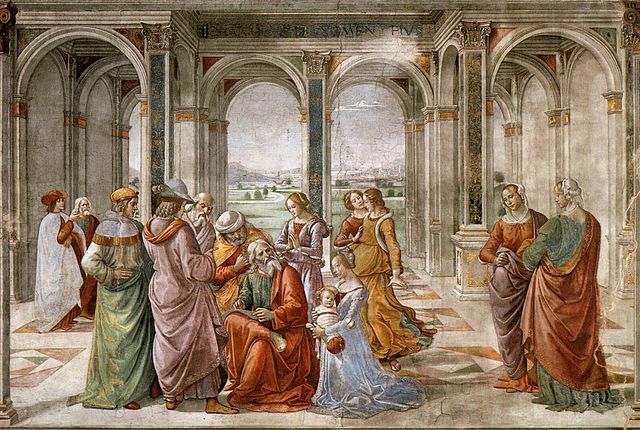
    Zacharias Writes Down the Name of his Son - 1486-90 - Ghirlandaio
    Zacharias Writes Down the Name of his Son – 1486-90 – Ghirlandaio

    Oooops.

    In Luke 1, Zachariah heard some extraordinary news and it was definitely hard to believe. He was a priest carrying out his duties at the altar when the angel appeared and identified himself. (Luke 1:18) This should have been good enough for a man of God, but he let doubt rule the day.

    Since he questioned the angel’s message, Zechariah was muted until he gave his new son the name John. (Read all about the birth of John the Baptist.)

    Zechariah wasn’t the first one to ever doubt God. If we are honest with ourselves, we know he wasn’t the last. It is something that every Christian struggles with.

    God doesn’t want us to be worried. He hates when we have doubt.

    And He has told us that a lot.

    Today, take your Bible out and look at all the ways that God let us know he wants us to put ourselves in his care and trust him:

    • James 4:7 – Submit yourselves therefore to God. Resist the devil, and he will flee from you
    • Proverbs 3:5-6 – Trust in the Lord with all your heart, and do not lean on your own understanding…
    • Romans 15:13 – May the God of hope fill you with all joy and peace in believing, so that by the power of the Holy Spirit you may abound in hope
    • Psalms 118:9 – It is better to take refuge in the Lord than to trust in princes
    • Matthew 24:35 – Heaven and earth will pass away, but my words will not pass away
    • John 14:1 – Let not your hearts be troubled. Believe in God, believe also in me.
    • And the big one: Matthew 6:25-34 – Do not be anxious for tomorrow, God will take care of you…

    Feelings of doubt, weakened trust, and worry are all dealt with through prayer and spending time in God’s word. (Romans 10:17) Some times are harder than others, but this is always the proper course of action.

    Make it a priority to do this more!