Author: Butch Adams

  • How to Get Your Money Through the Needle

    Christ and the Rich Young Ruler - 1889 - Heinrich Hofmann (1824–1911)
    Christ and the Rich Young Ruler – 1889 – Heinrich Hofmann (1824–1911)

    If the Bible doesn’t mention money more than any other subject, it certainly addresses it more than most other things that affect our spirituality:

    • You cannot serve God and money (Matthew 6:24)
    • She gave out of her poverty (Mark 12:41-44)
    • Be content with your pay (Luke 3:14)
    • Count the cost (Luke 14:28)
    • Your money perish with you! (Acts 8:20)
    • The love of money is the root of all kinds of evil (1 Timothy 6:10)

    … and lots more!

    The rich young man found out that his money was going to block his access to eternal life. (Matthew 19:16-30) Notice that Jesus never said that having the money is what going to keep him out of the kingdom of God. What made entry impossible for the young man was his attachment to the wealth.

    Prioritizing money is not just a problem for those that have gained excessive financial wealth. (I’ll leave it to you to define that.) It can be just as much of a hindrance for those of us with modest means and even those without enough. There is plenty that can be said about How to Get Rich and How to Get Enough, but Jesus made it pretty simple: you can’t be with God if he is not your priority! (Matthew 19:25-26)

    What are some ways you can improve your money handling that glorifies God?


  • Just How Merciful is God?

    Parable of the Wicked Servant - ca. 1620 - Domenico Fetti (1588–1623)
    Parable of the Wicked Servant – ca. 1620 – Domenico Fetti (1588–1623)

    I love how beautifully The Parable of the Unforgiving Servant sums up how important mercy and being merciful is in our relationship with God. (Matthew 18:21-35)

    The sum owed by the servant was several times more than the annual revenue of most of governments at the time, so hopefully the listener was shocked into realizing how hopeless his own case is and how forgiving God is.

    If you haven’t already, read the passage and look at how this parable is a parallel to our own salvation:

    • We are all servants of God
    • The unredeemed servants have a debt that cannot be repaid
    • Unredeemed servants fool themselves into thinking they have plenty of time to repay the debt
    • God’s grace is given to his servants without any merit on their part
    • A servant’s failure to act in the same way towards others will cause him to fall
    • God’s mercy is 100% revocable if we do not become – and remain – merciful and godly people

    Having forgiveness for others might be tough for us sometimes, but we know that Christ went through a pretty tough time for our own redemption.

    What was the last situation where you needed to be more merciful to someone?

  • How to Beat Temptation

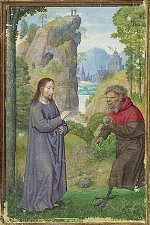
    Temptation of Christ - 16th Century - Simon Bening (circa 1483/1484–1561)
    Temptation of Christ – 16th Century – Simon Bening (circa 1483/1484–1561)

    Temptations are a part of life.

    The Bible uses the word “temptations” either as “lures to sin” or “trials and tribulations”. For now I want to concentrate on the things that lure us into sinning.

    Jesus taught us how to deal with temptation in short fashion:

    “If your hand or foot causes you to sin, cut it off and throw it away…” – Matthew 18:8

    When Jesus addressed our temptations to sin in Matthew 18:7-9, he didn’t leave a lot to the imagination, and he didn’t leave a lot of wiggle room to make excuses. For Jesus to use such a strong metaphor for dealing with the temptations in our lives, he meant for us to get drastic. He meant for us to remove the things that tempt us most in our lives – and remove them in a way that can’t be undone!

    Let’s think just a minute on the major sources of temptations:

    • Our workplaces
    • Our family
    • Our friends
    • Our hobbies
    • Our habits

    It is relatively easy to talk about giving up a hobby or changing a habit but …

    What about changing who you call your best friend?

    What about quitting your job?

    What about cutting off a close relative?

    These sources of temptations are the ones that we usually give each other leeway on when they are causing us trouble. But …

    Should I really suggest that you find another job because it is keeping you out of church too much?

    What Jesus says in Matthew 18:7-9 makes me think so.

    I understand that we will never have complete control over the environment we live in, but we can certainly remove a large number of opportunities to sin. Sometimes only one or two changes is all we need to remove most of the temptation from our daily routine.

    Personal challenge: What can you change in your life to remove a recurring temptation that you face?

  • How to Slow Down the Leaven

    Woe unto You, Scribes and Pharisees - between 1886 and 1894 - James Tissot (1836–1902)
    Woe unto You, Scribes and Pharisees – between 1886 and 1894 – James Tissot (1836–1902)

    The idea of “leaven” is used in both good and bad ways in the New Testament, but it is most often used like it is in Matthew 16:5-12 where Jesus discusses the leaven of the Pharisees and the Sadducees.

    The two groups had formed a powerful and loud opposition to Jesus. Despite his miracles, teachings and the fulfilled, they were failing to recognize (or at least acknowledge) that Christ could possibly be the Messiah. They were making sure they kept doubt and denials fresh in the people’s minds. They attempted to discredit him by saying things like:

    • Elijah had not come
    • His signs were of the devil
    • He sinned against Jewish traditions
    • He violated the Sabbath
    • He ate with sinners
    • He was a glutton and drunk

    This campaign against Jesus is a lot like what is still going on. People have placed themselves above following Christ’s simple gospel and are working overtime to get the masses to accept sin. They even approach it as if there is some moral imperative to be tolerant of even sinful behavior.

    The points we can make from this event are a lot like what I posted in the No Longer Silent article – We have to be aware of those that are undermining the gospel. Just like the leaven of the Pharisees and Sadducees, the leaven of the liberal and sinful world will slowly consume “the whole lump”. We cannot remain silent or fail to take action when we see it in action.

    Here is how we defend Christ against this so called leaven entering into the attitudes of Christians:

    • Know why certain behaviors are sinful
    • Know how to properly reference the Bible context that make an action sinful
    • Know the tricks they use to wrest the Scriptures’ meaning

    What are some current issues for which you need to be better informed? (Both in scripture and the dissenting viewpoints)


  • How to Demonstrate Faith

    Jesus exorcising the Canaanite Woman's daughter from Très Riches Heures du Duc de Berry, 15th century.
    Jesus exorcising the Canaanite Woman’s daughter from Très Riches Heures du Duc de Berry, 15th century.

    Every time I read the account of the Canaanite woman, the speech and actions from Jesus and the disciples makes me stop. (Matthew 15:21-28) At first glance it is all seemingly contradictory to the core message that Jesus has taught so far. To make it worse, the disciples elevate themselves above this woman for no other reason than her race. They have no reaction to the way Jesus spoke to her!

    I wonder if the apostles thought back to this day when they began to realize the gospel was for all. The Jews were going to have to be retrained to think of all people as God’s children, and this is the beginning of that training. Jesus teaches us at least three things in this short passage:

    Jesus demonstrates the importance of faith over any entitlements or preconceived notions. We know that God is no respecter of persons. (Acts 10:34) Wealth, race, beauty, nationality or any other human metric have no bearing with God.

    Jesus demonstrates that it is important to maintain faith even when we feel like we are not getting what we need. Sometimes our faith wavers a little bit when we have tough times. Jesus gave the woman two opportunities to walk away empty handed, but her faith kept her there reasoning with him.

    Jesus demonstrates that what he provides is more than enough. Jesus did not go back to the house to heal the daughter. He merely spoke the command to the woman that everything was going to be as she had asked. The woman went home without questioning that.

    We have been left with enough evidence of God and what he wants from us through his word. It is up to us to protect and nurture the faith that comes from studying that evidence. (Romans 10:17) Our faith will be tested often in this earthly life, but those tests are what helps us grow, and have hope, when we learn to deal with them. (Romans 5:3-5)

    What was your last test of faith and what improvement did it make on you?

  • Consistent Faith

    Faith in God is how to avoid worry.
    The Storm on the Sea of Galilee – 1632 – Rembrandt (1606 – 1669)

    Did you ever notice that people need constant work to make their faith grow? You might have also noticed that there aren’t many that admit it. It is difficult to show others consistent faith through the thick and thin of life.

    Even the disciples had to go through some rigorous training before they were on their own to spread the gospel. As Jesus walked up to them in the middle of a storm, on top of the churning water, they were afraid. They were afraid of Jesus and they were afraid of the wind and the waves. (Matthew 14:22-32)

    By the time the event was over, the group – probably euphoric from amazement – were “believers.” (Matthew 14:33)

    That was not the first miracle they had witnessed though. Just a few hours before, they had participated in the feeding of the five thousand.

    Their biggest show of fear, or lack of faith, was yet to come – they were going to scatter in every direction when Jesus is arrested and put on trial.

    This is the kind of thing that people do all the time. There is an ebb and flow of those that say they follow Jesus. Depending on the circumstances, they might or might not be full of faith on any given day. Every time Jesus said “Oh ye of little faith…” to the disciples, he was demonstrating his displeasure with them. That is the same boat we are in when we are not consistent in our faith!

    What does it take for us to be more consistent? More study? More worship? It is probably different for all of us, so challenge yourself to grow. What one thing can you do over the next year to make that happen?