Author: Butch Adams

  • This is How the Jews Missed Out

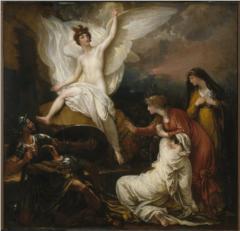
    The Angel of the Lord Announcing the Resurrection - 1805 - Benjamin West (1738-1820)
    The Angel of the Lord Announcing the Resurrection – 1805 – Benjamin West (1738-1820)

    There was something fishy going on there.

    Why in all of history has there never been posted a “resurrection watch” on a tomb except this once? (Matthew 27:66) Nicodemus was there (John 19:39) and could verify that Jesus was dead. His word should be as good as any among the Jews.

    Whatever the reason, there were now people in place who could be paid to lie, no matter what they had witnessed. (Matthew 28:15-16) The soldiers did so at great risk because they faced death for sleeping on the watch.

    That’s how the Jews who never became Christians missed out on the single most important event promised in their heritage. They allowed someone else tell them what to believe despite the evidence they had witnessed throughout Jesus’ ministry. In the process, they missed out on salvation.

    The same thing is going on right now.

    Many are going to miss out on salvation because they are ignoring the evidence. They fail to give God a second look because of a few lies that someone told them.

    Many are going to miss out because even though they believe, they are allowing someone else to guide them. They are willing to trust a teacher but not willing to verify.

    Many are going to miss out because they will pick and choose what they hear that reinforces what they want to believe.

    We may not encounter people who are actually paid to lie to us, but there are plenty of folks willing to make up stories that fit their agenda. It is up to us to stay diligent. Keep looking at the evidence!

    Matthew ends his gospel with Jesus’ command to teach all that he commanded. I infer from that that we should hear all that he taught.

    Since it affected an entire nation, I wonder what the Romans bought with that money …
     

  • The 10 Resurrections in the Bible

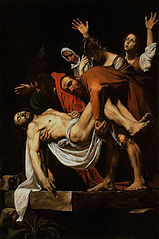
    The Entombment of Christ - 1602–1603 - Caravaggio (1571-1610)
    The Entombment of Christ – 1602–1603 – Caravaggio (1571-1610)

    We don’t talk about the other resurrections much.

    I can’t recall ever hearing about the one recorded in Matthew 27:58 in any major context. After doing a little research, it turns out that it is a historically debated event for the last several centuries.

    I wanted to take the time to look at the other resurrections recorded in scripture today, so here they in Biblical order:

    • The Widow of Sarepta’s son – 1 Kings 17
    • The Shunamite’s son – 2 Kings 4
    • The man that touched Elijah’s bones – 2 Kings 13
    • Jairus’ daughter – Matthew 9
    • The saints in Jerusalem – Matthew 27:58
    • The widow of Nain’s son – Luke 7
    • Lazarus – John 11
    • Dorcus – Acts 9:41
    • Eutychus – Acts 20:9-10

    Obviously, none of these matter to us the same way that Christ’s resurrection does, but they do server as an excellent reminder of the God’s power.

    Bonuses

    I will file this one away as an example of God’s providence. Did you ever notice that Jesus was provided with a brand new tomb? If he had been put into a used tomb, his resurrection could have been attributed to touching the bones of a prophet like the 2 Kings 13 event.

    It’s no wonder the Centurion was convinced. It looks like the only graves that opened were of those Matthew considered saints. This is probably a good preview of how it will happen on judgment day.

    Nicodemus was there too. (John 19:39) He helped Joseph and the Marys tend to the body. Here is an official Sanhedrin member that witnessed his death. No “not really dead” theories have legs to stand on because of this.

  • Swayed By the Crowd

    "Give us Barabbas" Illustrations from volume 9 of The Bible and its Story Taught by One Thousand Picture Lessons, edited by Charles F. Horne and Julius A. Bewer, published in 1910.
    “Give us Barabbas”
    Illustrations from volume 9 of The Bible and its Story Taught by One Thousand Picture Lessons, edited by Charles F. Horne and Julius A. Bewer, published in 1910.

    What is it about a crowd that makes it persuasive? Why are individuals of a certain opinion willing to change it based on what the crowd tells them it should be?

    • The crowd forced Aaron into making the golden calf
    • The crowd was ready to hand David’s kingdom over to Absalom
    • The crowd chose Barabbas

    We can look throughout history to see how leaders were able to use the crowd to get their way. Just like the Jewish leadership convinced the crowd to crucify Jesus, (Matthew 27:15-23) change of any kind can be made by winning enough buy-in.

    I’ve written before about the need for Christians stop being silent on social issues. If we use our voices, we can reverse some of the momentum they have achieved.

    The power of the crowd works in both directions. Just like it was used to erode moral values, it can be used to teach (and in many cases – re-teach) the majority what is good and right in the site of God.

    The “safety in numbers” that we usually feel is more often than not, a false sense of security.


  • When We Deny Christ

    The Denial of Peter - ca 1610 - Caravaggio (1573–1610)
    The Denial of Peter – ca 1610 – Caravaggio (1573–1610)

    What if we were to lump a decision not to act on behalf of Christ, into the same category as Peter denying Christ? (Matthew 26:69-75)

    When we hear others make disparaging remarks about our Lord, isn’t failing to defend him the same as agreeing?

    When consciously we do something sinful, isn’t that like turning our backs on him?

    What if the Lord were to turn and look at you every time you deny him like he did to Peter that day? (Luke 22:61)

    How would that feel?

  • How a Little White Lie is Not Little or White

    Christ before Caiaphas - ca. 1630 - Matthias Stom (fl. 1615–1649)
    Christ before Caiaphas – ca. 1630 – Matthias Stom (fl. 1615–1649)

    After an entire night of searching, they finally found a witness willing to make one lame statement.

    “This man said, ‘I am able to destroy the temple of God, and to rebuild it in three days.’” – Matthew 26:61

    Those who wish to discredit God’s word have been working tirelessly since that day to finish the job the Jews started. The witnesses who came forward with this distorted version of Jesus’ words were just the beginning.

    Century after century, God’s word still stands even after continuous attacks by those who desired to either control it or destroy it. Attacks like the witnesses made against Jesus require some basic ingredients to succeed:

    • Someone willing to lie
    • Someone willing to believe a lie
    • No one willing or able to challenge the lie

    This is how social issues that are outside of Christian moral standards are becoming commonplace. Some are even making their way into the church!

    It is easy to find people on any given day who are distorting God’s word to serve their agenda. As Bible scholars, we not only need to know the word well, we have to be willing to stand up for it.

  • How to Be Prepared For His Return

    Parable of the Wise and Foolish Virgins - ca. 1616 - Hieronymus Francken (II) (1578–1623)
    Parable of the Wise and Foolish Virgins – ca. 1616 – Hieronymus Francken (II) (1578–1623)

    The five foolish virgins (Matthew 25:1-13) and the servant with one talent (Matthew 25:14-30) shared a common end: They were shut out.

    The parables also have a common thread within them: The ones who were shut out were presumably members in good standing within their respective households.

    If I could only pick one thing from each parable that would have changed everything for the foolish ones, it would be these:

    • The foolish virgins should have been prepared – Christians should be living both like Christ is returning today and like he will be waiting until tomorrow.
    • The servant with one talent didn’t act on what he knew about the master – Christians know what God expects from us, yet many do not deliver.

    The combination of these lessons gives us a basic sketch of proper Christian living:

    • We are to prepare ourselves for Christ’s return at any given moment
    • We should be prepared to sustain that readiness for a lifetime
    • We will need to have prepared a proper settlement of our accounts on that day

    What can you do to improve your readiness today?