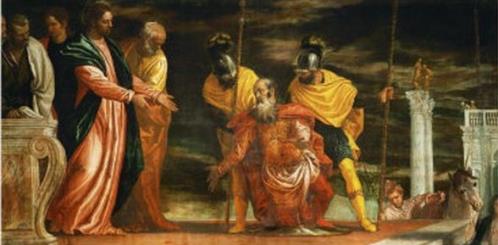
Jesus healing the servant of a Centurion – Paolo Veronese (1528–1588)
In Luke 7:1-10, the centurion’s servant is healed. Jesus marveled at his faith compared to what he was finding among the Jews.
The centurion had good references (Luke 7:4) from the Jewish elders even though he was a Gentile. He was also an officer in the hated army of Rome. He built the synagogue for the Jews and as far as we can tell, he believed in Jesus as soon as he knew about him.
It might be human nature to size people up based on external factors, but it is not God’s nature to do so. (cf. Acts 10:34, James 2:1) As today’s call to action, try to reach out to someone that others might have written off because of who they are.
We might find a centurion.
We might even be impressed like Jesus was. (Luke 7:9)
After the triumphal entry in Jerusalem, (Mark 11:1-11) we find Jesus in the temple cleansing it for the second time. (Mark 11:15-16)
Here are some interesting points about the Mark account:
The first time he cleansed the temple, (John 2:13-16) Jesus told the merchants not to profane his father’s house. He didn’t do that this time.
Mark gives the account of Jesus withering the fig tree in conjunction with the temple cleansing.
Jesus calls the merchants thieves and robbers this time.
The lessons go much deeper than I can cover in this space, but in a few words: I see the time for grace coming to an end, I see judgment, and I see those who didn’t produce being destroyed.
I leave you with these thoughts for your own study.
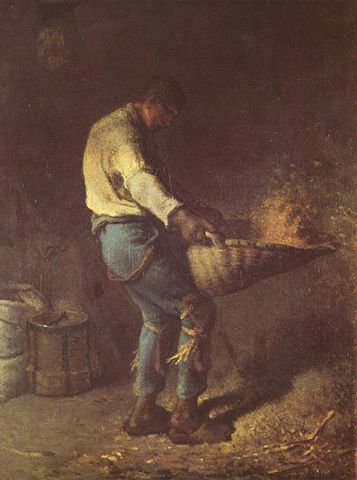
Le vanneur (The Winnower) – 1846-1847 – Jean-François Millet
He shall be like a tree Planted by the rivers of water, That brings forth its fruit in its season, Whose leaf also shall not wither; And whatever he does shall prosper.
The ungodly are not so, But are like the chaff which the wind drives away. Therefore the ungodly shall not stand in the judgment, Nor sinners in the congregation of the righteous. – Psalm 1:3-4
His winnowing fan is in His hand, and He will thoroughly clean out His threshing floor, and gather the wheat into His barn; but the chaff He will burn with unquenchable fire. – Luke 3:17
Chaff is the husks of the wheat seed that is removed before being ground into flour. It is used throughout the Bible as a metaphor for the sin, or sinful people and the treatment they will receive at the judgment.
We know who or what chaff is, but what does it do?
For just a minute, I want to think about the military version of chaff rather than the husks and stems in wheat. Chaff is a very simple and effective defensive weapon used to fool missiles and other devices that use radar. It is comprised of flakes and strips of material that are highly reflective to the radar signals. The net result is when chaff is launched into the air, a cloud of this stuff forms around the target and is obscured in a way that causes the weapons to miss it.
Let’s look at all of the opportunities that the world offers us for diversions and time wasting
TV
Video games
The Internet
Hanging out with Friends that don’t share our godly goals
To keep our chaff metaphor going, one might say that Satan is launching chaff to counter our goal to get to heaven. Nothing is wrong with these activities in and of themselves, but how much is leeched from our visitation, our Bible study or our family time?
Now think about some of the “overlooked” sins
Social drinking
Clothing that isn’t as modest as it should be
The lottery
Dancing
Even if we are good time managers, many of today’s activities are desensitizing us to things that should be offending us. Even so called family shows and cartoons are riddled with innuendo and “mild” curse words.
In the end, an active Christian in good standing with his peers might find himself off target when it is all said and done. Just like an experienced radar operator can pick out his target in the midst of the chaff, we need to keep our sights on the target. We became Christians when salvation became our objective. When the chaff is “burned away,” will you still be on course?
Here’s just a quick thought to take away after reading Romans 1:21-22 – man gets only one major life defining opportunity. We get a choice of believing in God and honoring him and his commands or not. Those who choose “not” no longer have anything relevant to contribute to eternity. Finish the chapter to see how that lifestyle turns out.
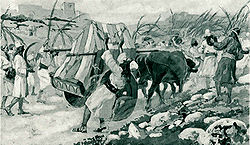
Uzzah laid his hands on the Ark of the Covenant and was struck down. (1 Chronicles 13) He was trying to save it from falling, but God had commanded that only a person from the tribe of Levi could touch the ark. (Numbers 1:51, Numbers 4:15) Even though he was angry at first, David realized that God is a righteous judge.
It is an error to think that God will not keep his word when our judgment is due.
David made a mistake we don’t have to make. He forgot to make sure he knew how to obey God’s word. Even though he had the best of intentions, he paid for it through the loss of a good man.
In addition to daily Bible reading, do you set aside time to really get to know the word?
_008.jpg)